Amla: The Ancient Elixir for Modern Well-being

Every season, nature offers exactly what the body needs.

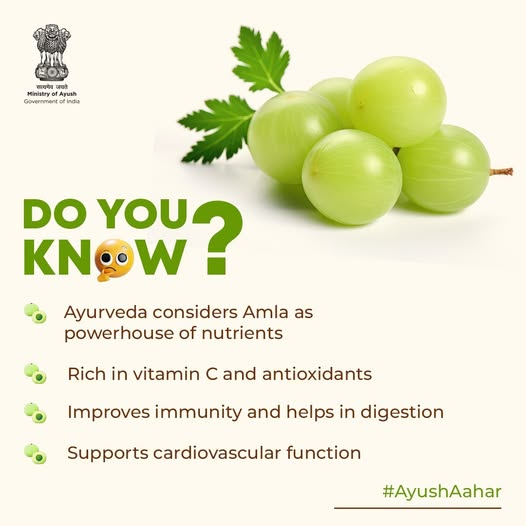
And right now, it gives us Amla (Indian Gooseberry) — a small, green fruit with extraordinary healing power.

In Ayurveda, Amla is celebrated as a Rasayana — a rejuvenator that restores vitality, strengthens immunity, and nurtures every cell. It balances all three doshas and nourishes the deepest layers of our body — from digestion to emotional well-being.

“Vayasthapani Rasayani” — that which delays aging and sustains youth.

As the warm hues of autumn fade and the cool whispers of winter begin, nature gifts us one of its most potent treasures — Amla (Indian Gooseberry).

Tiny, tangy, and radiant in its simplicity — Amla is no ordinary fruit.

It is Ayurveda’s Rasayana, grandmother’s secret tonic, and modern nutrition’s antioxidant hero — all rolled into one.

  • Rasa (Taste): Predominantly sour, yet contains all tastes except salty.
  • Virya (Potency): Cooling (Sheeta).
  • Vipaka (Post-digestive effect): Sweet (Madhura).
  • Dosha Action: Balances Vata, Pitta, and Kapha — truly Tridoshic.

Amla kindles Agni (digestive fire), cleanses Ama (toxins), and rejuvenates every cell — making it the perfect ally as we move into the cooler months.

Why This Season Belongs to Amla

From October to February, fresh Amla ripens across India — precisely when our bodies need extra nourishment and protection.

This is not coincidence — this is nature’s rhythm.

In Ayurveda, the transition from Sharad Ritu (autumn) to Hemant Ritu (early winter) is a time when:

  • Pitta accumulated from summer needs cooling,
  • Agni (digestive power) strengthens naturally,
  • and the body starts preparing to build deeper Ojas for immunity.

Amla’s cooling, rejuvenating, and antioxidant nature makes it the perfect seasonal Rasayana.

#AmlaHealthTips
Our Festivals Knew It Long Before We Did

Our ancestors didn’t just celebrate festivals — they lived Ayurveda.

Every ritual, food, and festival was designed around nature’s calendar.

Take Amla Navami (Amlaki Ekadashi) — celebrated during Kartik month (October–November) — when fresh Amla begins to appear.

Families would worship the Amla tree, prepare Amla-based dishes, and eat under its shade — not as ritual alone, but as a seasonal wellness practice.

Even during Diwali, foods rich in ghee, grains, and Amla-based sweets were included to fortify the body as temperatures dropped.

Our ancestors understood that each season brings its own natural Vitamin C source:

  • Spring: Citrus fruits and tender greens
  • Summer: Raw mango and lemon
  • Monsoon: Guava and amaranth leaves
  • Autumn–Winter: Amla — the king of Vitamin C

This cycle ensured that immunity, digestion, and energy were continuously supported — not by supplements, but by seasonal eating in sync with nature.

Modern Science Meets Ancient Wisdom

Today, research confirms what Ayurveda proclaimed millennia ago.

Amla is a nutrient powerhouse, especially rich in Vitamin C and antioxidants.

Modern Nutritional Highlights:

  • Vitamin C: 600–700 mg per 100 g (20x more than oranges)
  • Polyphenols, Tannins, and Flavonoids: Neutralize free radicals and protect cells.
  • Chromium and Iron: Improve metabolism and hemoglobin.
  • Amino Acids: Support tissue repair and collagen formation.

Modern Health Benefits:

Everyday Amla Combinations — Simple Yet Profound

Each Amla combination in Ayurveda is a synergy of taste, energy, and intention:

Amla + Curd

1 tsp Amla powder in a bowl of curd after lunch.
Balances Pitta, improves digestion, and enhances nutrient absorption.

Amla + Rock Sugar (Dhaga Mishri)

1 tsp Amla powder + 1 tsp Mishri.
Nourishes hair, calms heat, supports scalp health.

Amla + Buttermilk

1 tsp Amla powder in a glass of buttermilk.
Brightens skin, cools system, aids detox.

Amla + Warm Water

1 tsp Amla powder with warm water on empty stomach.
A gentle detoxifier and gut cleanser.

Amla + Black Sesame Seeds

1 tsp Amla powder + 1 tsp crushed sesame seeds.
Prevents premature greying, strengthens hair and bones.

Amla + Honey

1 tsp Amla powder + 1 tsp honey (morning ritual).
Boosts immunity, clears respiratory tract, balances seasonal allergies.

Fresh Amla Recipes You Can Try This Seaso

Amla Juice

Blend 3–4 fresh Amlas with water, strain, and drink with honey.
Excellent for liver health and glowing skin.

Amla Murabba

Steamed Amla soaked in honey or jaggery syrup.
A sweet Rasayana for energy and rejuvenation.

Amla Chutney

Blend Amla with coriander, rock salt, and chili.
Enhances appetite and digestion.

Amla Tea

Boil dried Amla with tulsi and ginger — sip warm. Perfect immunity-boosting tea for the cold season.

Amla Rice

Grated Amla tempered with mustard, curry leaves, and turmeric — mixed with rice.
Tangy, vitamin-rich meal for lunch.

Amla Beyond Food
  • Amla Oil Massage: Improves hair growth and prevents greying.
  • Amla Face Mask: Amla powder + rose water = natural glow.

Amla Water Rinse: For smooth, shiny hair.

In Essence — Living in Sync with Nature

Our ancestors didn’t rely on supplements — they relied on seasons.

They trusted that what grows now is what the body needs now.

Amla season reminds us to come back to that rhythm —

to eat what nature offers, when it offers it,

to align our body’s clock with the planet’s wisdom.

So, this season — bring Amla into your life.

Not as a trend, but as a timeless ritual.

Because when your food follows the rhythm of the Earth, your body follows the rhythm of wellness. 

Dr. Satyadeepa